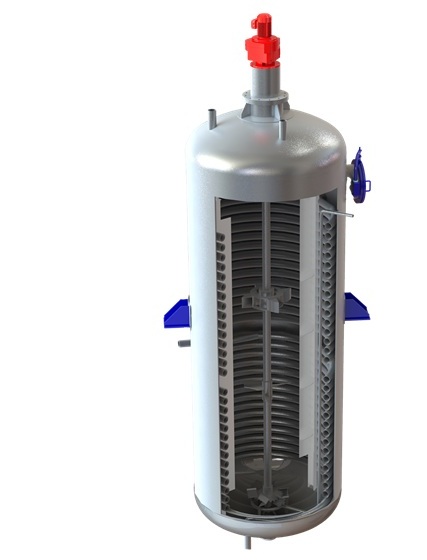
Interesterification
Desmet selects the interesterification technology that perfectly meets the operational logistic and operational needs of a speciality plants: highly flexible production of a wide range of blends as well as dedicated lines for hard stocks and structured lipid via enzymatic processing.

Enzymatic interesterification
Enzymatic interesterification is a modification process applied in edible oils processing industries to “rearrange” the fatty acyl groups within and between the different triglycerides. Such redistribution will invoke a real mix on the molecular level, so that a blend of a hard fat and a soft oil can convert into an oil with intermediate melting properties. Application of these products are typically margarine fats, soft confectionery fats.
More and more oil modification industries are converting to enzymatic processing for the interesterification. The use of specific enzymes, instead of metal alkoxides used in chemical interesterification, allows to work under much milder reaction conditions, with less post-treatment costs involved, better and reduced product loss. The oil can be fed in a continuous way to immobilized enzymes and allows a 24/7 consistent, stable production.

Advantages of Enzymatic interesterification
Superior process performance
Sustainable technology
Efficient engineering
Chemical interesterification
Chemical interesterification is a modification process applied in edible oils processing industries to “rearrange” the fatty acyl groups within and between the different triglycerides. Such redistribution will invoke a real mix on the molecular level, so that a blend of a hard fat and a soft oil can interesterified into an oil with intermediate melting properties. Application of these products are typically margarine fats, soft confectionery fats, etc.
A typical interesterification process is a quick batch process, whereby chemical catalyst is added and mixed with a dry blend of oils and fats, eg. soybean oil and palm stearin. The catalyst action is deactivated by adding in citric acid solution, followed by another drying stage. Typically the freshly interesterified oil blend is post-treated with a bleaching step to ensure stability during storage and/or further processing. Especially for operations with many different blends and formulation recipes, the set-up of a chemical interesterification plants allows utmost flexibility in producing the tailor-made speciality fats in a consistent, automated fashion with minimal crosscontamination between batches.